
Your Real Estate Leads Are Not Really Cold. You Might Just Be Contacting Them Incorrectly.
A lead inquires about your property. They get a call. Perhaps even a WhatsApp message. Then... nothing.
After a few weeks, the sales team moves on to other leads. But what if that "cold" lead just wasn't quite ready yet?
That is where the importance of lead nurturing in real estate comes in. When you're dealing with dozens and hundreds of property leads, it is not about creating more leads but developing relationships with the leads coming your way.
What Does It Mean to Nurture Leads in Real Estate?
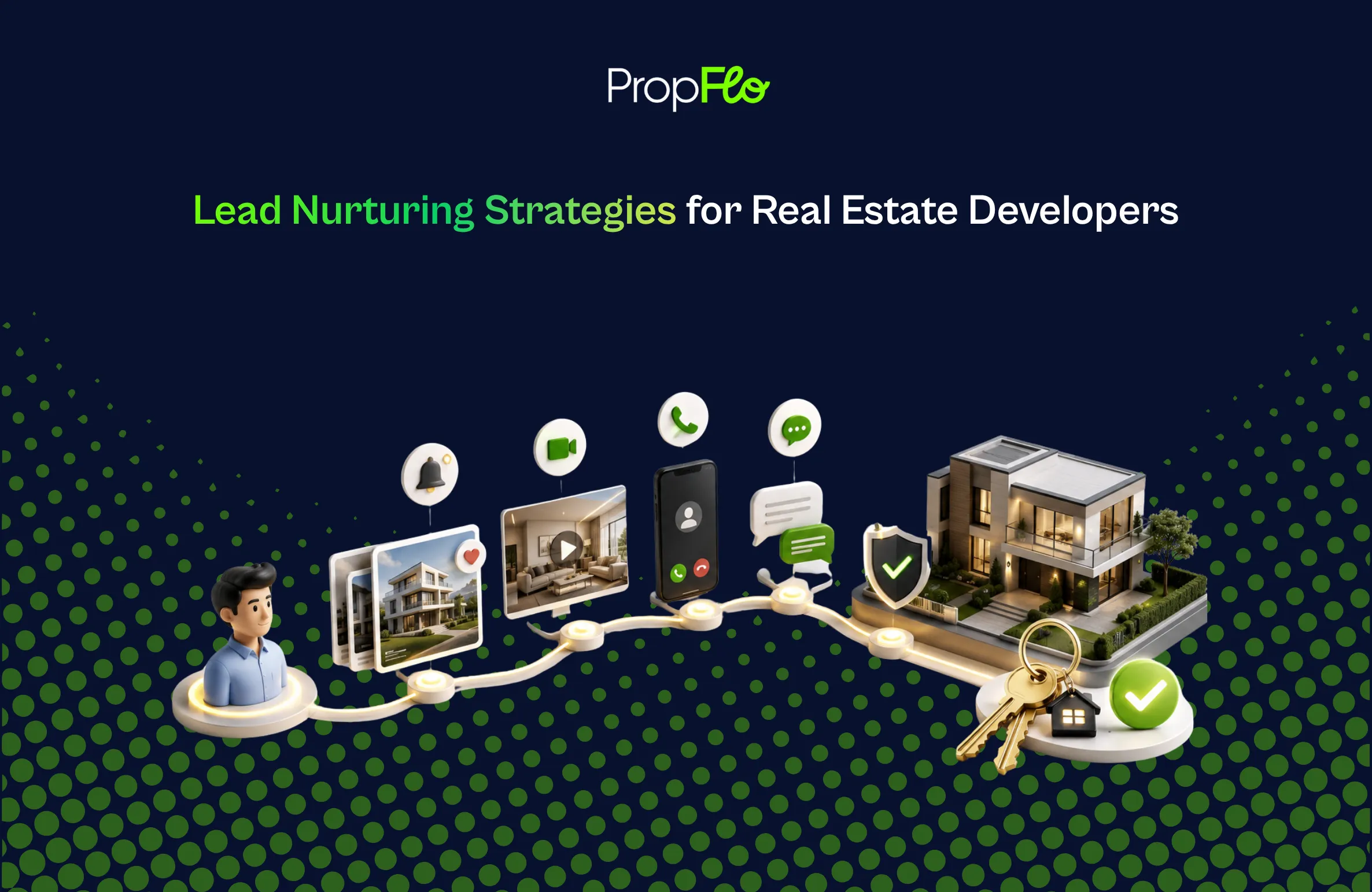
The definition of lead nurturing in real estate is the ongoing communication process with potential clients until they are ready to move forward with their decision to purchase property.
This can involve milestones such as:
- A site tour or walkthrough of the project
- Another value-driven conversation
- A formal reservation or booking
- Making a first payment milestone
Lead nurturing differs significantly from a single, generic follow-up call made by a salesperson.
Seven Strategies for Nurturing Leads for Real Estate Developers
1. Stop Chasing New Leads. Look After Your Existing Database.
A major opportunity in managing real estate leads lies right in the database you already have. Developers don’t have to rush into more lead generation spending; they can simply sort out their existing leads according to multiple factors:
- Interest in the project and budget limits
- Location preferences and timeline for purchase
- Previous interactions and site visit frequency
2. Approach Follow-Ups from a Value-Added Perspective
A common phrase in real estate sales is “just following up.” In reality, effective follow-up provides actual value to convince the prospect to reply.
Instead of: "Just checking in if you're interested."
Try: "A property has become available that matches your specifications. Would you like the pricing details?"
3. Divide & Conquer (Lead Segmentation)
Leads aren’t created equal. First-time inquiries should be treated differently than prospects who have already completed a site visit. Align your communication with where they stand in the funnel:
Lead Received → Qualified → Demonstrated Interest → Visited Site → Negotiating → Ready to Book.
4. Streamline Your Roadmap with Drip Campaigns
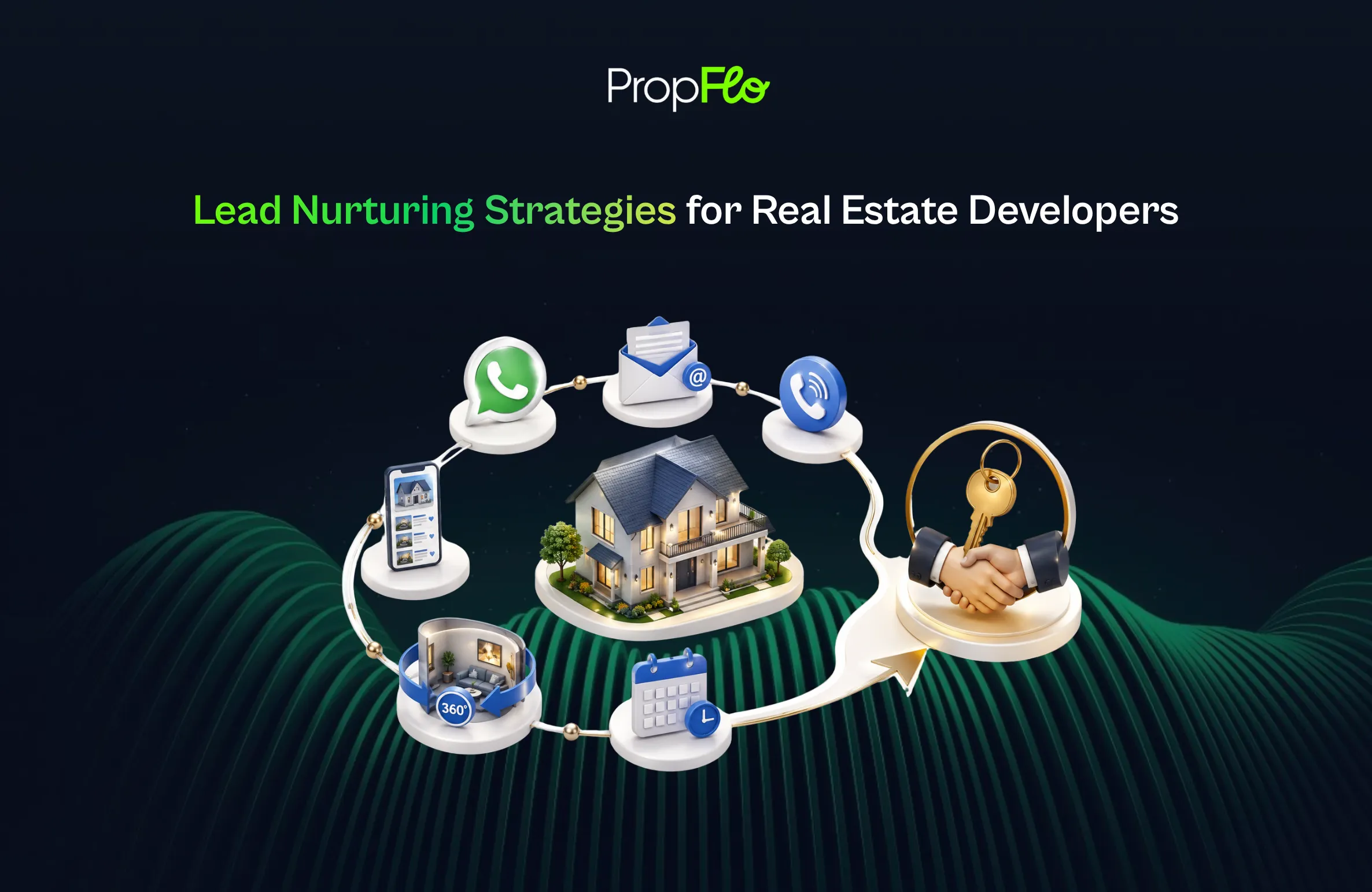
Sales representatives cannot manually relay every single correspondence. Automated drip marketing campaigns nurture leads seamlessly:
- Day 1: Project overview and property details
- Day 3: Configuration or amenities highlights
- Day 7: Invitation for a physical or virtual site visit
- Day 14: Payment plan and financing information
- Day 21-30: Inventory updates & human sales outreach
5. Automation Shouldn't Compromise the Human Aspect
While administrative tasks like lead allocation, follow-up alerts, and data input are automated, the relationship remains human-oriented. The goal of AI and CRM systems is not to automate the relationship, but to automate the work around it.
6. Provide Incentives to Reconnect
When a prospect goes quiet, stop pushing for a booking and provide informative triggers instead: new inventory updates, price changes, project milestones, or updated payment plans.
7. Identify When a Lead Needs Personal Attention
Recognize behavioral triggers—such as repeated engagement with pricing links, opening campaign emails, or asking about availability—to seamlessly hand the lead over from automation to a human salesperson.
PropFlo’s Contribution to Effective Real Estate Lead Nurturing
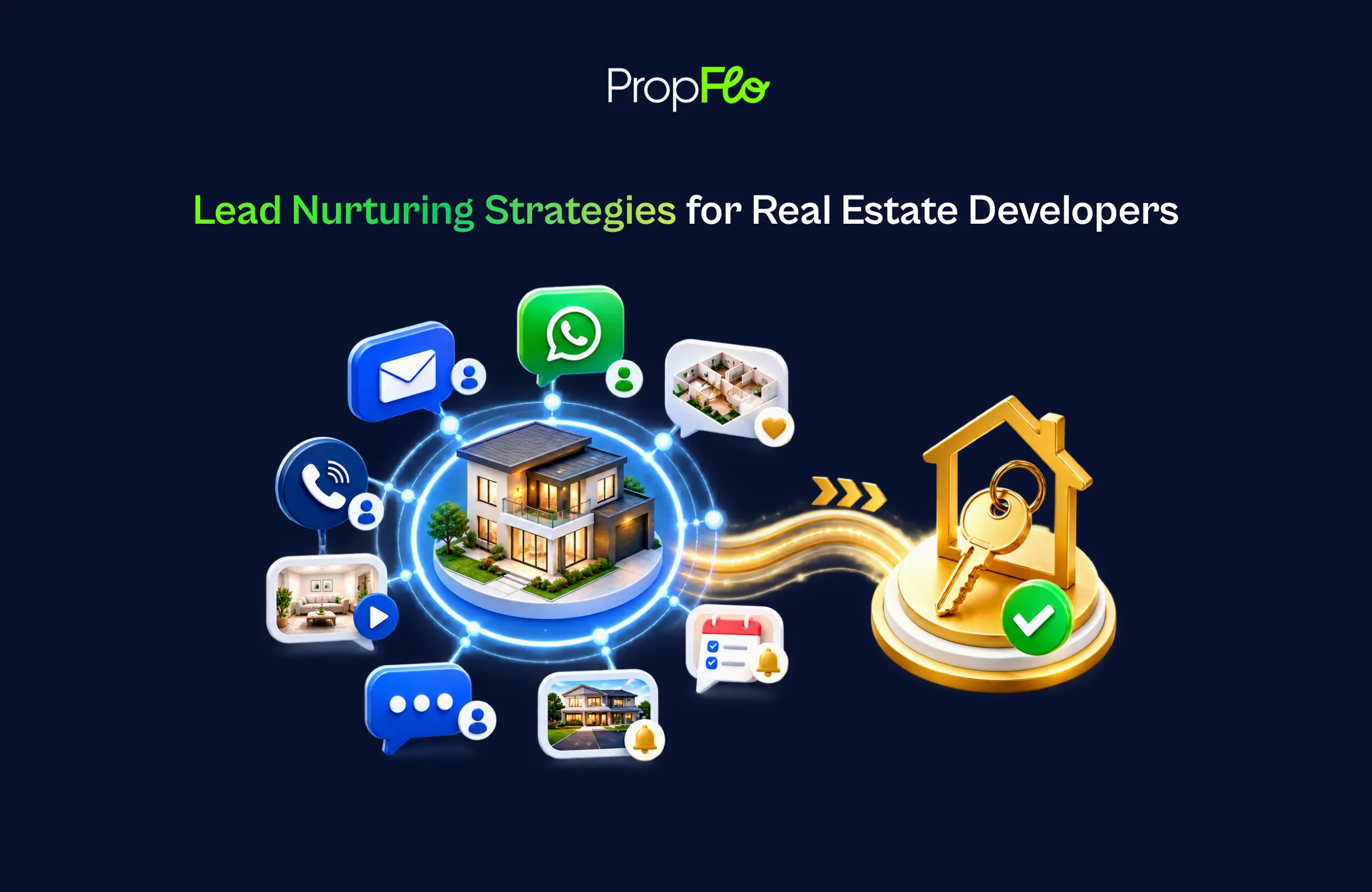
Lead nurturing can be overwhelming due to scattered communications across departments. PropFlo unifies everything from lead acquisition across social media, web forms, WhatsApp, emails, and online chats into a single, cohesive real estate CRM.
PropFlo combines WhatsApp and email automation workflows with complete contextual history so sales teams always enter conversations prepared.
Conclusion
More leads don’t necessarily mean more profits. For real estate companies, the biggest opportunity lies within their existing database.
By leveraging smart connectivity, structured nurturing workflows, and sales automation, developers can evolve from simple inquiry collectors into relationship builders.