
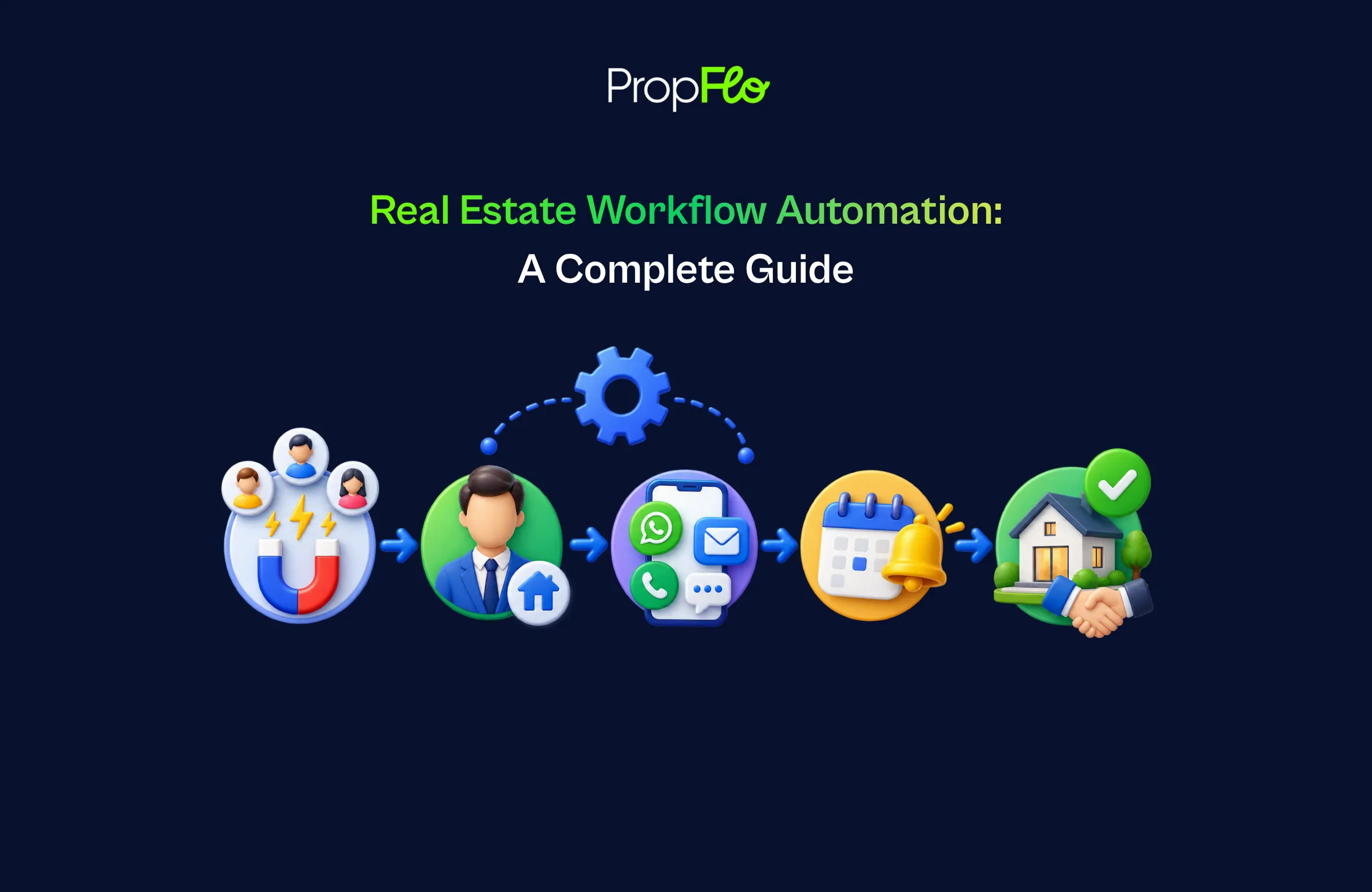
Wherever There Are Processes, There Is Real Estate. And Many More Processes.
A new lead appears. One person assigns it. The salesperson calls. Another resource schedules site visit slots. There is follow-up. Documents go back and forth until payments are tracked down. Many teams are involved. The buyer is constantly asking for updates, and there is always someone who needs to find out something.
With fewer leads, teams can work with customers in person. When the number of leads increases, teams start working with processes instead of customers. This is where workflow automation comes into play.
Workflow automation isn’t limited to sending some emails or adding another feature in a CRM. Workflow process automation is about creating a connection between the repetitive steps of the real estate business so that a desired event can take place without prior intervention. And in 2026, artificial intelligence gives teams the ability to automate those processes much more effectively.
Real Estate Workflow Automation Explained
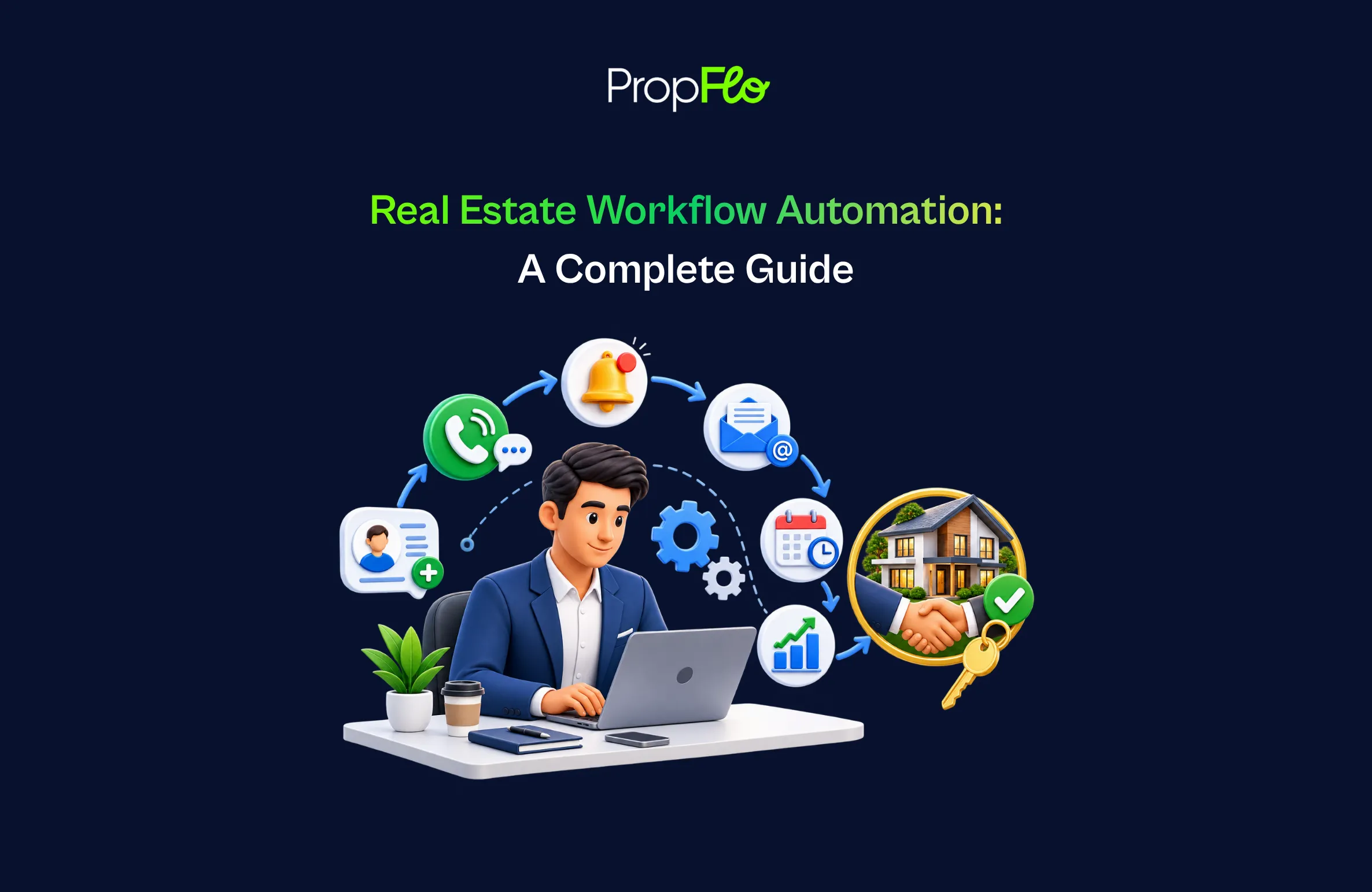
Real estate workflow automation is the application of software, rules, integrations, and artificial intelligence in automating repetitive tasks throughout sales and customer processes of a property.
In this case, there is no need to wait for someone to remember what is supposed to happen next. For instance, these steps can be taken automatically by the program:
The goal is clear: Less manual searching. Fewer skipped actions. Higher transparency.
The Dependence of Real Estate on Coordination
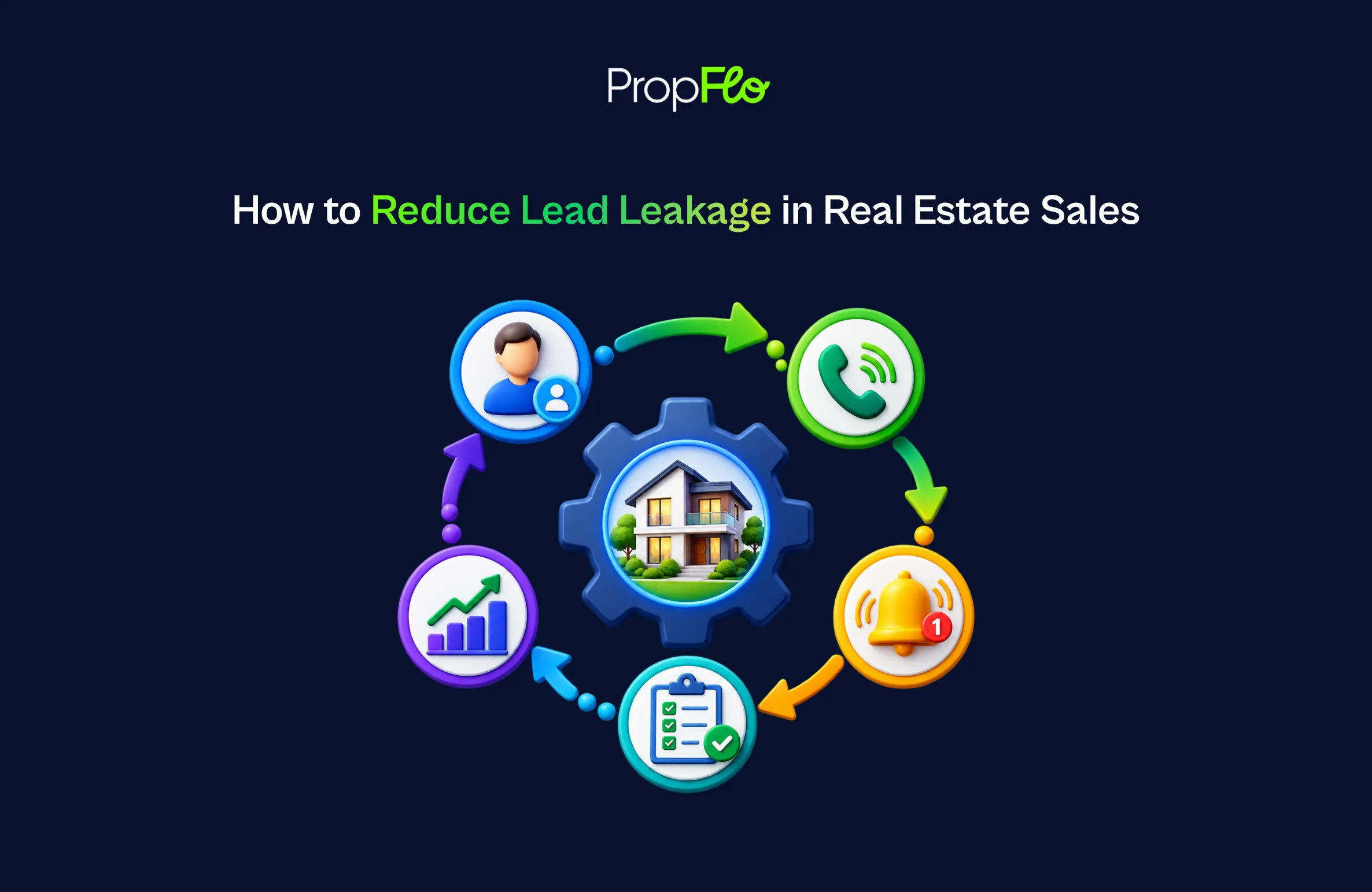
The real estate sector is highly reliant on the coordination of many different parties:
- Marketing generates leads.
- Sales qualifies the leads.
- Pre-sales schedules the site visits.
- Finance processes payments.
- Legal processes documentation.
- Customer Service deals with all inquiries.
- Projects provide updates about construction.
- Post-sales becomes active after booking.
The customer sees one company as a whole. When teams work with separate systems, they lose pieces of information during the handoffs. This is one of the primary reasons to use workflow automation.
A recent study by EY regarding GenAI in the Indian real estate market in June 2026 explains that fragmented data and manual coordination prevent effective order execution, while pointing out opportunities for AI to help shorten decision-making, increase sales speed, and improve customer relations.
What Tasks Can Be Automated in the Real Estate Industry?
Not every task is eligible for automation, but there are many operational areas that benefit significantly:
1. Automated Lead Management in Real Estate
Automation handles incoming leads across websites, portals, social media, and chat apps to ensure leads are captured, checked against duplicates, assigned to dedicated agents, and acknowledged immediately while establishing follow-up reminders.
2. Automated Lead Follow-Up
Generic communications fail. Contextual automation triggers specific sequences based on website browsing behavior, brochure downloads, or property engagement, ensuring consistency without robotic messaging.
3. Automation of Workflow in Property Sales
Automates administrative sales burdens—such as viewing appointments, feedback collection, approvals, and reminders—ensuring no operational steps slip through the cracks.
4. Automating Transfers Among Teams
Connects marketing, sales, finance, legal, and post-sales teams so booking data, payment confirmations, and customer promises are automatically shared without manual handoffs.
5. Post-Sales Workflow Automation
Manages milestone payments, construction updates, customer queries, and final handover processes seamlessly within a unified lifecycle framework.
AI Transforming Real Estate Workflow Automation
Standard automation works on fixed rules (When X occurs → perform Y). Artificial intelligence adds advanced analytics—detecting correlations, summarizing correspondence, ranking prospects, and assisting in smarter decision-making.
For example, instead of a basic reminder like "Send a reminder if uncontacted for 24 hours," an AI-based system prioritizes leads dynamically: "This lead visited the site and reviewed pricing but hasn't replied for three days; make them a priority follow-up."
Which Area Should Be the First to Automate?
Focus on processes that are high-volume, repetitive, and measurable:
- Lead assignment: Reduces conversion time.
- Lead follow-up: Eliminates missed opportunities.
- Site visit management: Automates scheduling and feedback.
- Documentation: Generates correct legal documents at the right stage.
- Payment notifications: Keeps customers and internal teams updated.
- Customer communication: Balances automated routine updates with personal conversations.
- Post-sale requests: Routes client issues to the correct department smoothly.
A Major Mistake: Automating an Inefficient Process
Automation will not resolve an inefficient process; it will only accelerate it and worsen the problem. Always define responsibilities, triggers, and exception handling before automating.
How PropFlo Implements Automation of Processes in Real Estate
The foundation of PropFlo is simple: Real estate companies shouldn't have to link every phase of the customer lifecycle manually. PropFlo links all necessary tools and processes so teams can navigate sales workflows seamlessly.
By removing unnecessary administrative tasks from the workflow, sales professionals can focus entirely on direct communication with potential clients rather than wondering if reminders were sent.
PropFlo - Customer Lifecycle Management for property transactions.
Frequently Asked Questions
1. What does real estate workflow automation entail?
Real estate workflow automation makes use of software, regulations, integrations, and AI to automate routine activities involved in lead management, marketing, customer communication, documentation, and after-sales.
2. What does real estate sales automation entail?
Real estate sales automation refers to the use of technology to automate repetitive tasks performed in lead assignment, follow-ups, site visit reminders, task management, and updates across selling stages.
3. How does CRM automation assist real estate businesses?
Real estate CRM automation tools help companies collect leads, delegate them, monitor communications, send reminders, and maintain a central database of customer activity.
4. What is automated lead follow-up?
Automated lead follow-up refers to utilizing rules or artificial intelligence to initiate timely notifications and messages according to prospect activity and sales pipeline stages.
5. Should every real estate process be automated?
No, repetitive and rule-based tasks should be automated, whereas complicated customer interactions requiring negotiations, provisions, or high financial impact should involve human decision-making.